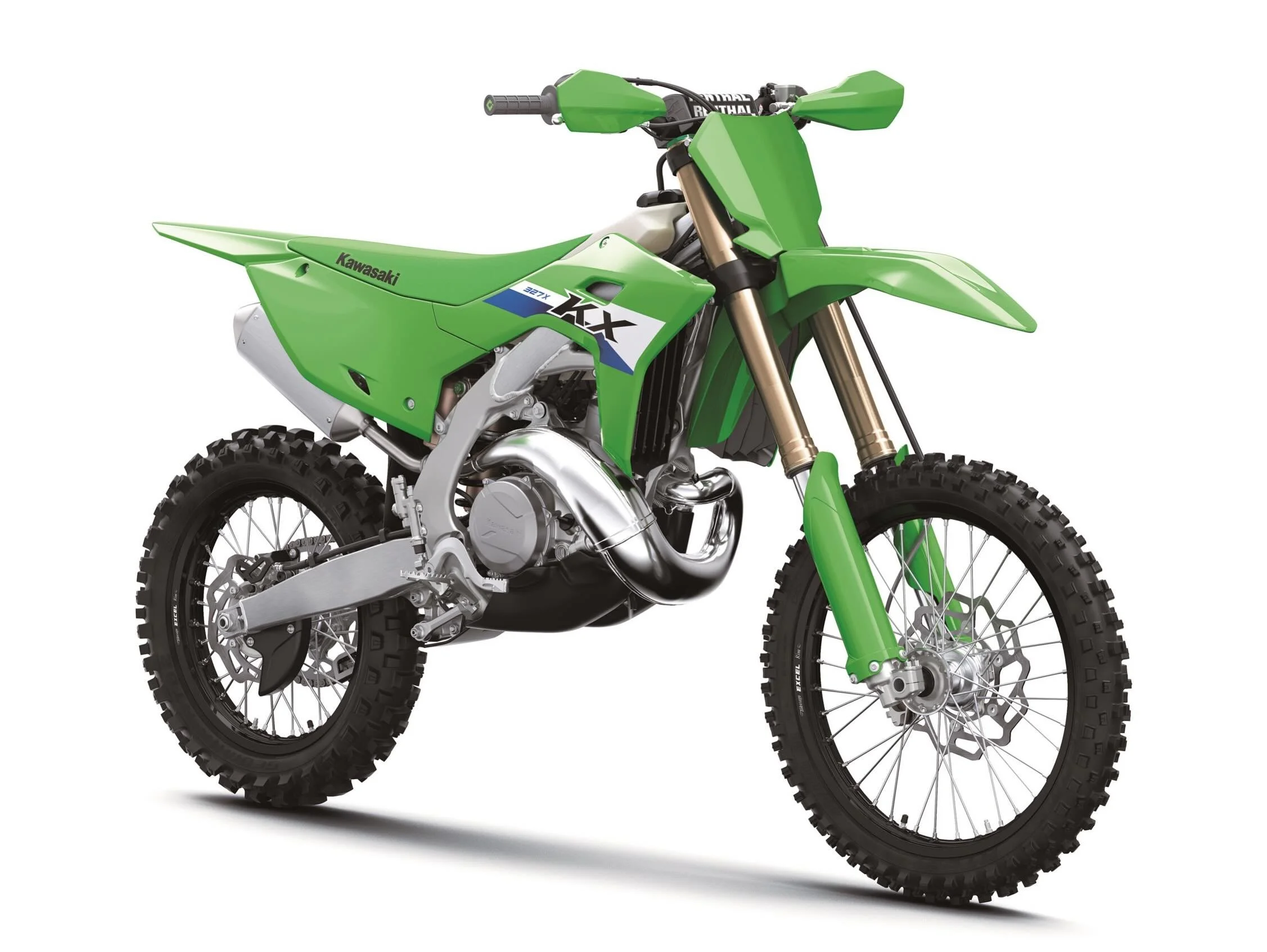
KAWASAKI KX327: IS THIS THE FIRST DOMINO TO FALL
The Kawasaki KX327 Isn't Just Another New Bike – It Could Change Everything
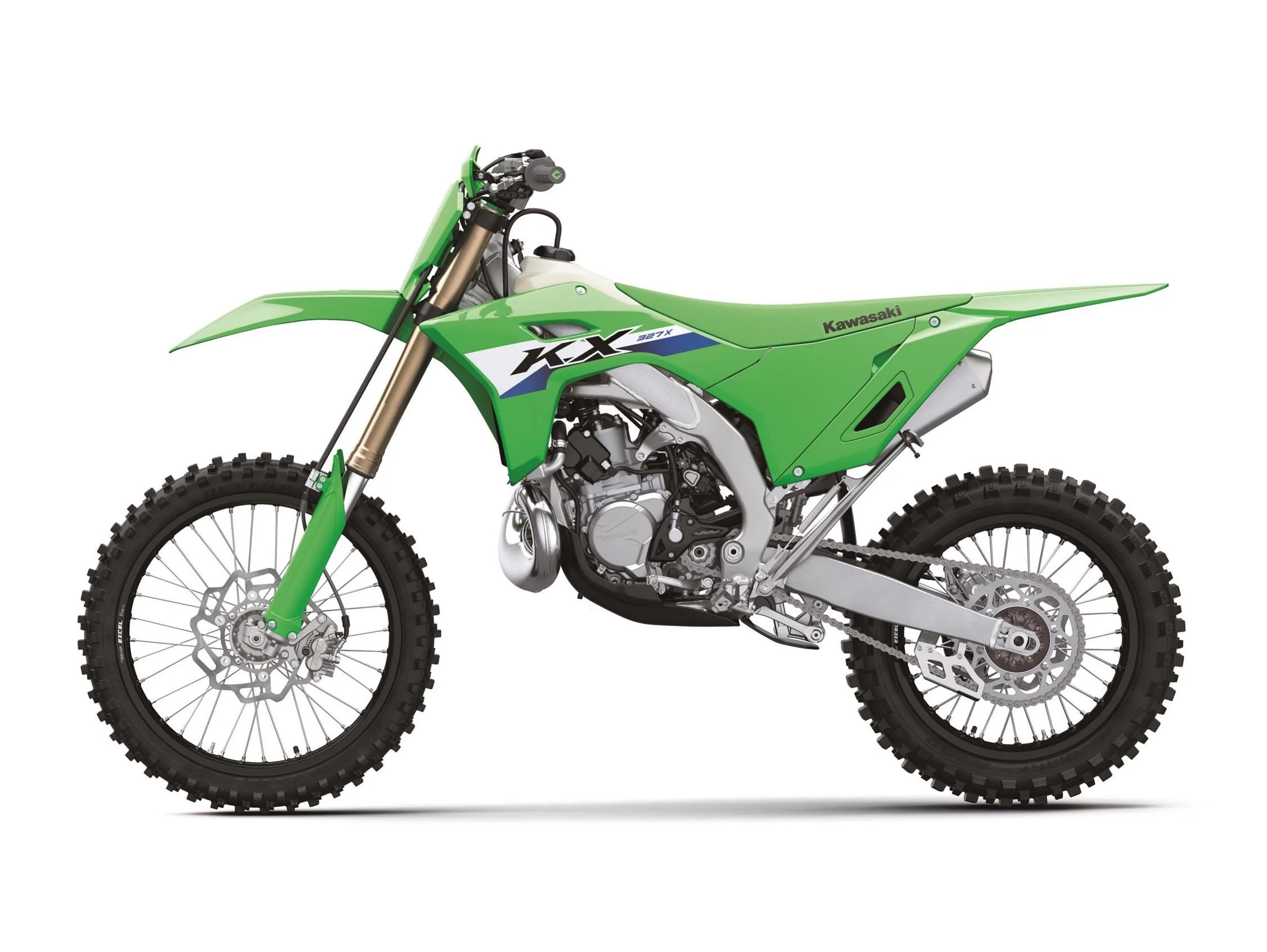
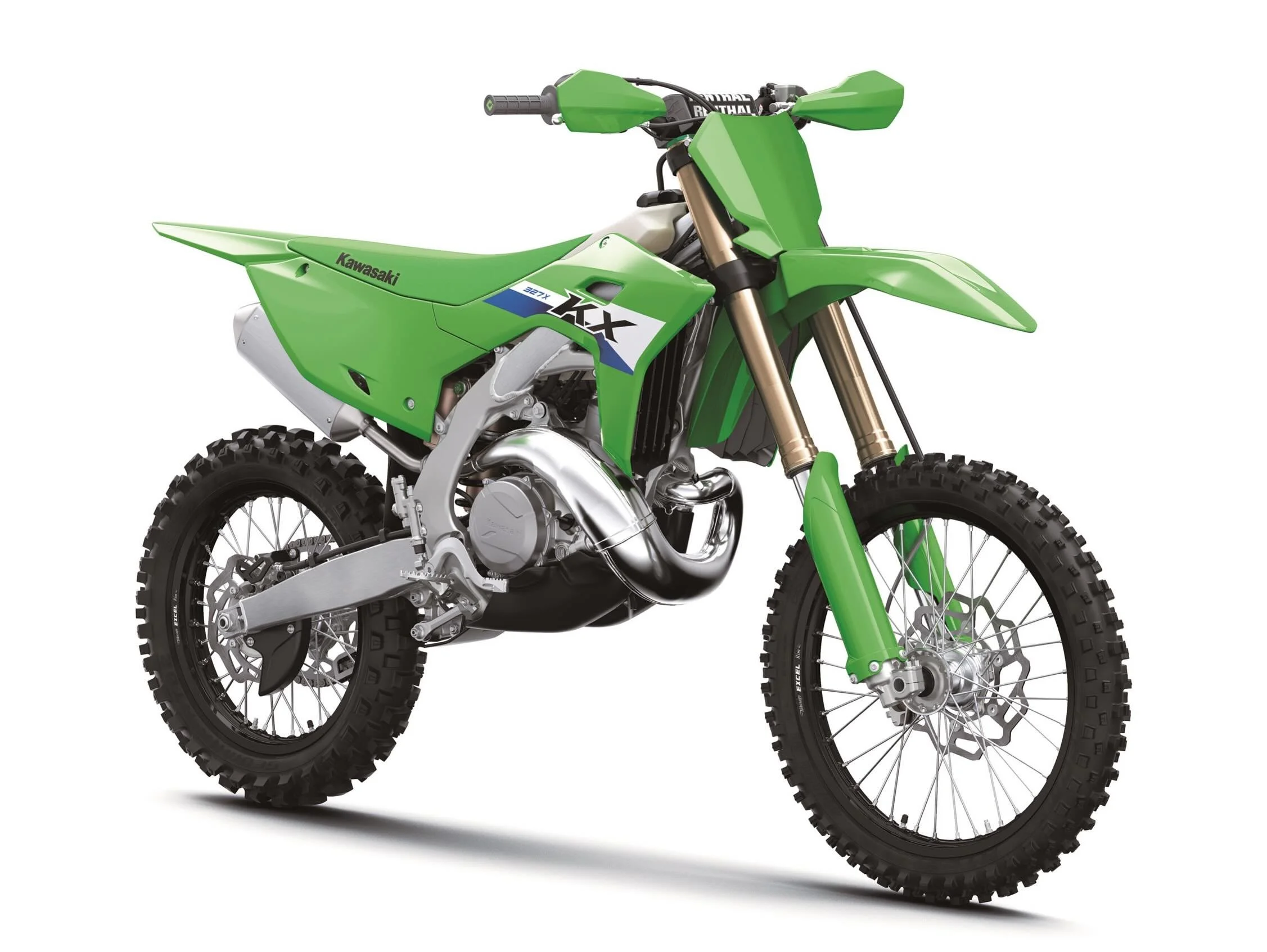
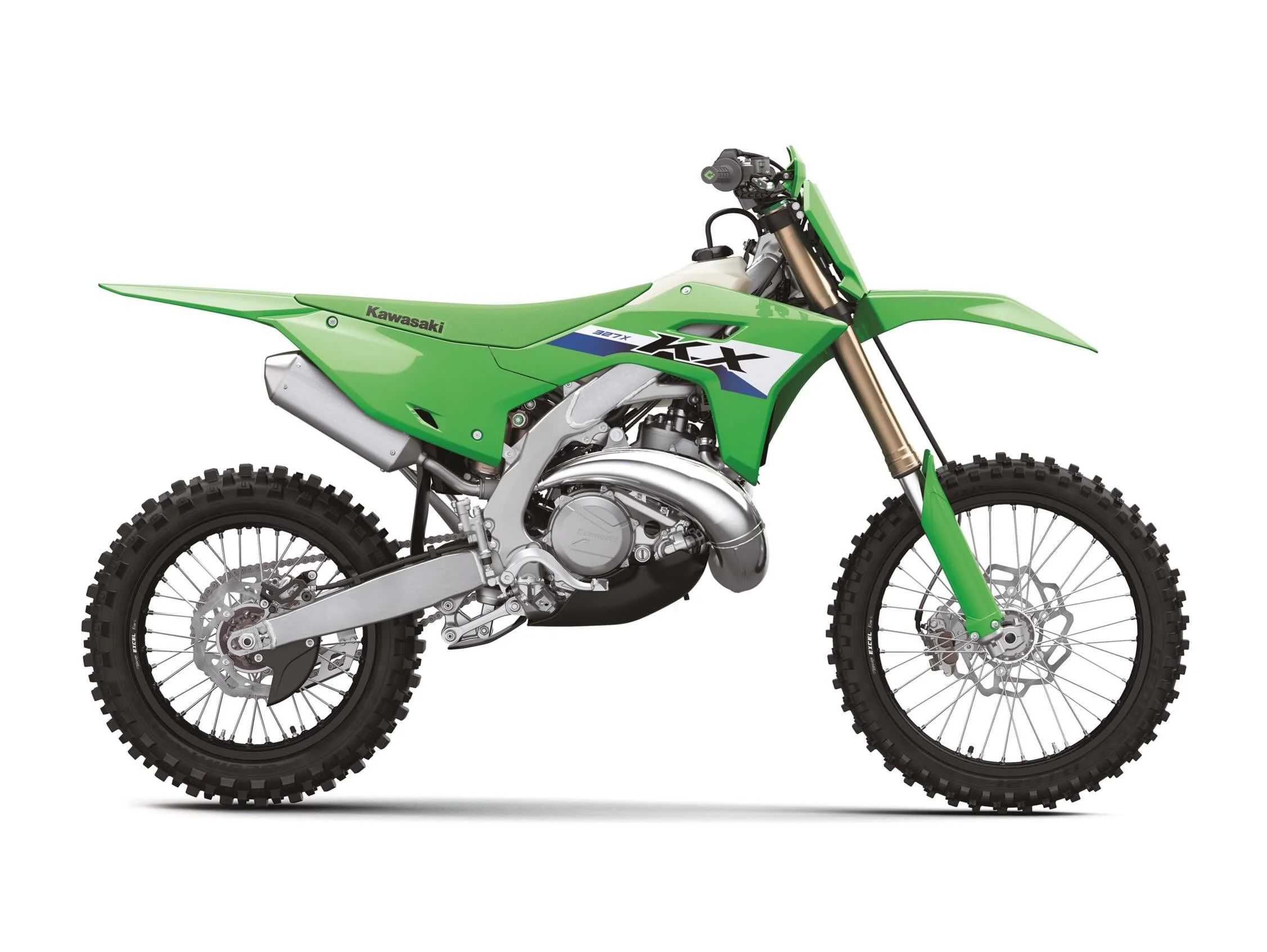
For nearly two decades, the Japanese motocross industry has largely walked away from full-size two-stroke development. Sure, Yamaha deserves credit for keeping the YZ125 and YZ250 alive, but they've remained largely unchanged for years. Reliable? Absolutely. Loved by riders? Without question. But genuine Japanese two-stroke innovation has been almost non-existent since the late 2000s. That's why the announcement of Kawasaki's all-new KX327 is such a massive moment for the off-road industry.
This isn't a rehashed engine stuffed into a modern chassis. It isn't a nostalgia project. And it certainly isn't a compliance bike designed simply to keep two-stroke fans happy. The KX327 is a completely new motorcycle.
This is a fuel-injected 327cc two-stroke, electric-started, hydraulic-clutched, multi-power-moded, smartphone-connected, mean-looking machine. It sports the latest aluminium perimeter frame and modern KYB suspension. In short, Kawasaki has done exactly what many riders have been asking Japanese manufacturers to do for years…build a modern two-stroke from the ground up. And that is why I think this bike really matters.
The First Domino?
For years, the European manufacturers have owned the modern two-stroke conversation. KTM, Husqvarna, GasGas, Beta, TM, Sherco and others continued investing heavily in smokers while the Japanese brands focused almost exclusively on four-strokes. The result was a huge shift in the marketplace. If you wanted a cutting-edge two-stroke with fuel injection, electric start and modern electronics, you went European - no question. If you wanted Japanese reliability and parts availability, you bought a Yamaha that was fundamentally based on a platform developed many years ago, although still very competitive in the MX scene.
Kawasaki has now become the first major Japanese manufacturer to genuinely challenge that status quo. In fact, Kawasaki itself states the KX327 represents its first newly developed two-stroke platform over 250cc in more than 20 years. That statistic alone tells the story. For an entire generation of riders, Japanese manufacturers simply weren't competing in this segment. and those of us who remember, remember very fondly when the Japanese were the two-stroke overlords.
The big question is whether this becomes the first domino to fall. Will Yamaha respond with an all-new YZ250? Will Honda finally revisit the CR legacy? Could Suzuki return to the two-stroke market altogether? Those questions suddenly don't seem as unrealistic as they did a week ago.
Why 327cc?
Perhaps the most interesting aspect of the announcement isn't that Kawasaki built a two-stroke - it's that they built a 327. Not a 250 or 200 or 125. A 327cc machine that sits directly in the territory currently occupied by KTM's 300 range and Beta's 350RX. From my thoughts, the bike isn't chasing peak horsepower claims. It’s probably chasing plenty of torque, rideability, and reliability.
The company repeatedly talks about low-rpm traction, smooth torque delivery, controllable power, and broad usability. Fuel injection, dual-injection technology, electronic power valves, and multiple power modes have all been incorporated specifically to tame the traditional "light-switch" personality that many riders associate with older big-bore two-strokes. In many ways, Kawasaki appears to be targeting exactly the type of rider who has migrated toward European 300s over the last decade. Think trail riders, cross-country racers, vet riders, and even possibly hard enduro enthusiasts with the X model.
Yes, another smart move from Kawasaki is that they haven't tried to make one bike do everything.
The new platform arrives as two distinct models: the motocross-focused KX327 and the cross-country-oriented KX327X. Both share the same all-new fuel-injected 327cc engine, aluminium perimeter frame, electric start, hydraulic clutch, and electronic features, but they're aimed at very different riders. And the 327X comes with all the usual off-road components you would expect.
The Industry Reaction Says It All
Perhaps the biggest indicator of the KX327's significance isn't the spec sheet - it's the reaction. Across social media, forums and rider communities, the overwhelming sentiment has been excitement. One of the most common themes appearing online is simple: "Finally." Finally, a Japanese manufacturer is investing in two-strokes again. Others see it as genuine competition for KTM's long-standing dominance in the segment, with riders openly discussing whether Kawasaki could challenge the Austrian giant's position in the market. A little too early to be calling that out in my opinion, but there is something really cool about this green big-bore two-stroke even though not everyone is ready to crown it the new king.
Whether this makes huge moves in the market is kind of beside the point. The fact that we're even having that conversation is what really matters.
More Than Just Another Model Launch
The KX327 arrives at an interesting time. Two-strokes are experiencing something of a renaissance. Young riders are discovering them for the first time. Veteran riders are returning to them after years on four-strokes. Hard enduro has exploded globally. And many riders are questioning whether they really need the complexity, weight, and maintenance costs associated with modern four-stroke race bikes.
It appears that Kawasaki clearly sees this trend; otherwise, it probably wouldn't have invested millions of dollars developing an entirely new platform. Manufacturers don't build bikes like this unless they believe there's a market waiting.
The Bottom Line
The KX327 may eventually prove to be an incredible motorcycle. Or it may take a generation or two to reach its full potential. Either way, that's not why this bike is important. The significance of the KX327 is that it signals something many riders thought we'd never see again: a major Japanese manufacturer committing serious resources to the future of two-strokes. For nearly twenty years, Europe carried that torch alone. Now Team Green has stepped back into the fight. And if Kawasaki sells every KX327 it can build, which, judging by the current excitement, is entirely possible, the rest of Japan has to pay very close attention.
The KX327 isn't just a new bike. It might be the motorcycle that starts the next chapter of the two-stroke story. Father time will be the judge of that.
Related Content